- Mitochondria are highly dynamic changing signaling organelles with continuous intense material exchange with the cytoplasm, involved in biological processes like cell death, inflammation, apparent modification, and other biological processes. As sensitive organelles in cellular communication networks, mitochondria receive, process and export various types of signals, including small molecules, proteins, nucleic acids, etc., Accumulated evidence has shown the existence of a bidirectional communication mechanism between mitochondria and the cell nucleus, known as mitochondrial-nuclear communication. This communication involves the interaction between signaling molecules produced by mitochondria and transcription factors in the cell nucleus, regulating the regulatory network of gene expression in the nucleus. This communication mechanism plays a key role in maintaining normal cell function, adapting to environmental changes, and regulating cell fate. Here, we present some mitochondria-based communication network in our MitoCommun database (details in the following Figures).
-
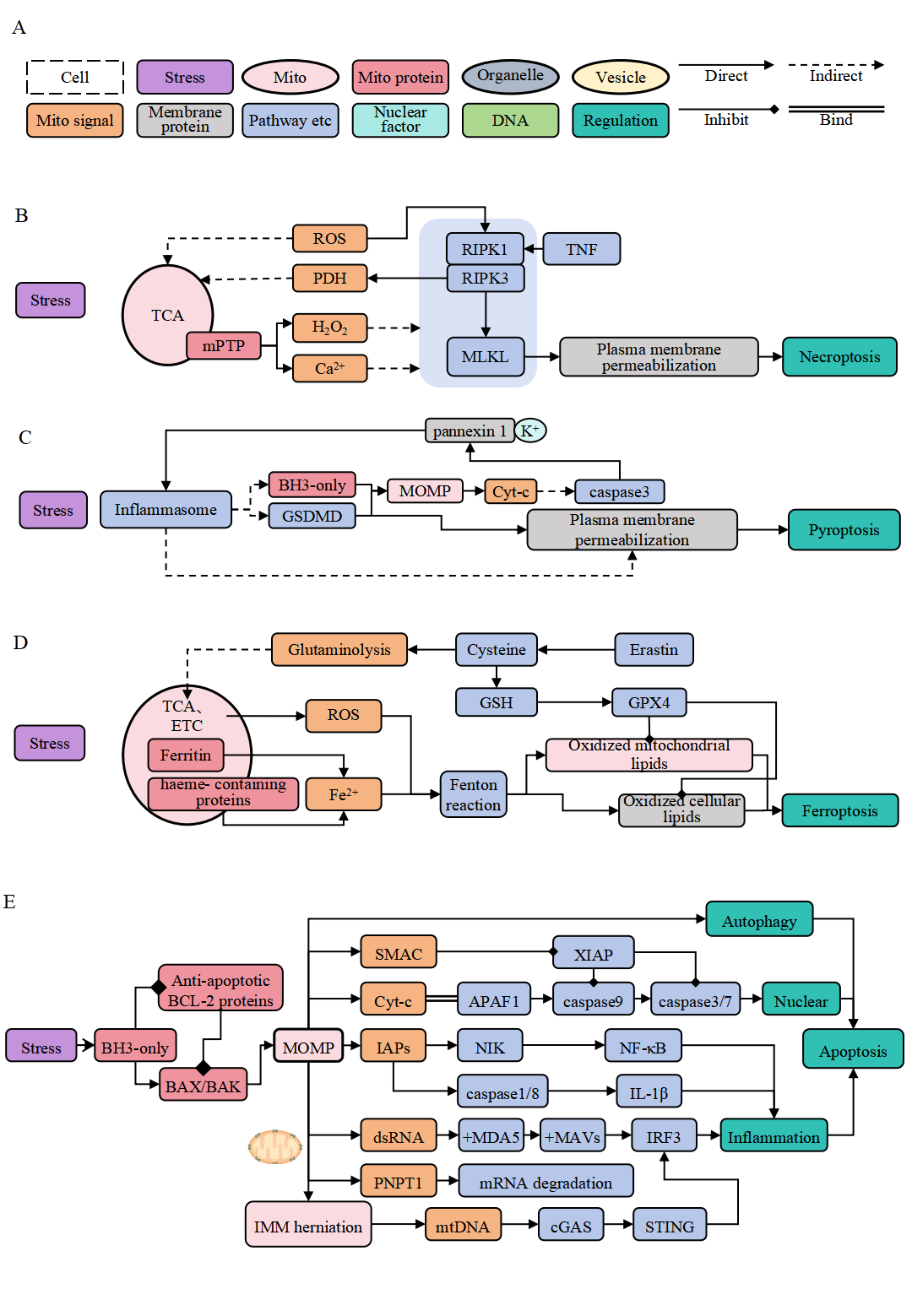
Figure 1. The role of mitochondria in cell death: A. Annotation of the networks. B. Necrosis, C. Pyroptosis, D. Ferroptosis, and E. Apoptosis.
Legend: Different shapes and colors distinguish signaling pathway modules. Solid arrows indicate activation or forward signaling, blunt-ended lines indicate inhibition, and dashed arrows denote indirect interactions. Double solid lines indicate molecular binding or complex formation.
Note: Figures 2, 3, and 4 share the legend with Figure 1.
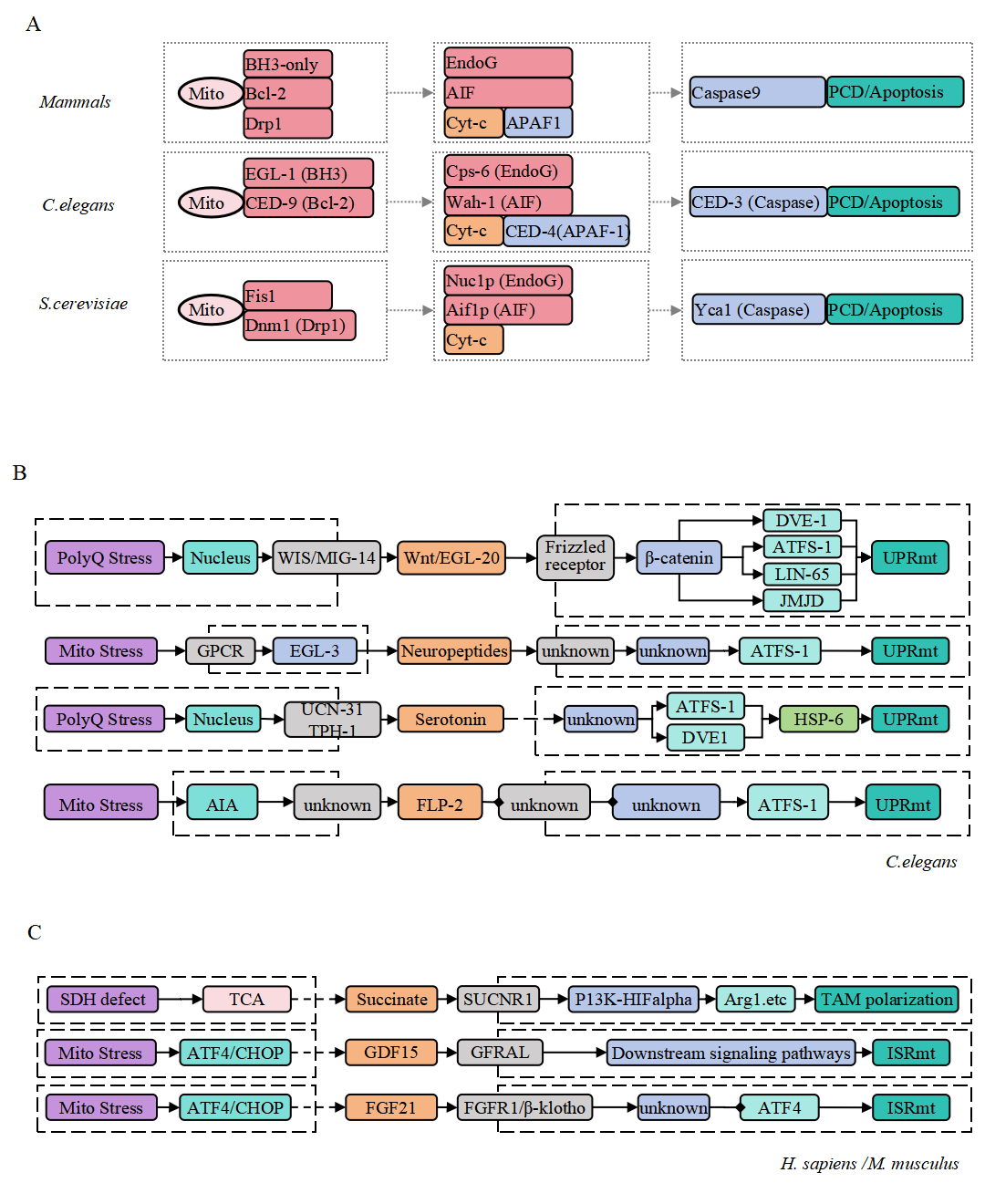
- Figure 2. Comparative analysis of mitochondrial signaling pathways across species. A. Cross-species comparison of apoptotic pathways B. Systemic mitochondrial signaling pathways in C. elegans. C. Mammalian-specific inter-tissue mitochondrial communication networks.
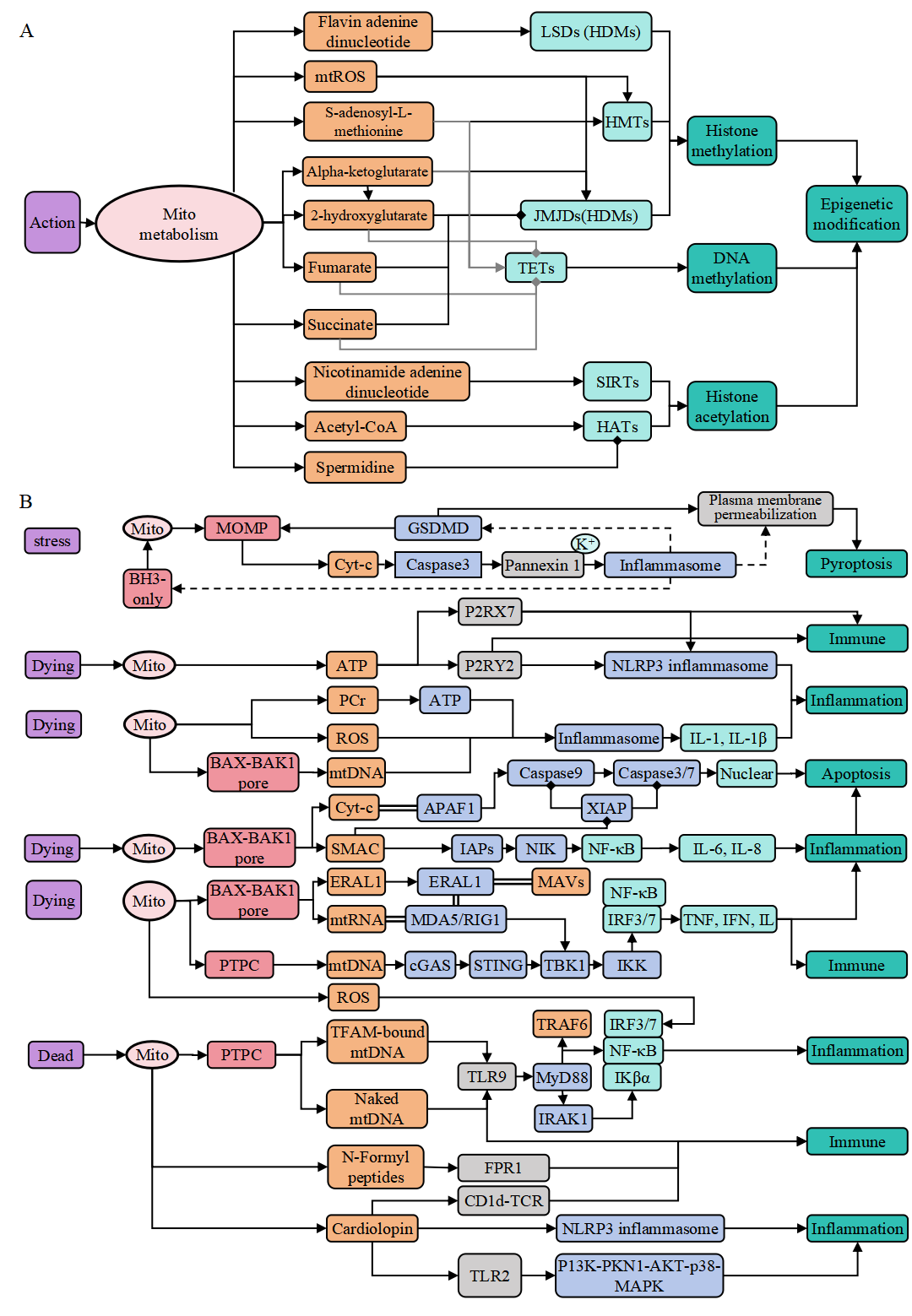
- Figure 3. Regulatory networks of mitochondrial signaling in biological processes. A. Architecture of mitochondrial signaling networks modulating host epigenetic regulation. B. Integrated signaling networks governing cell death, immunity, and inflammation.
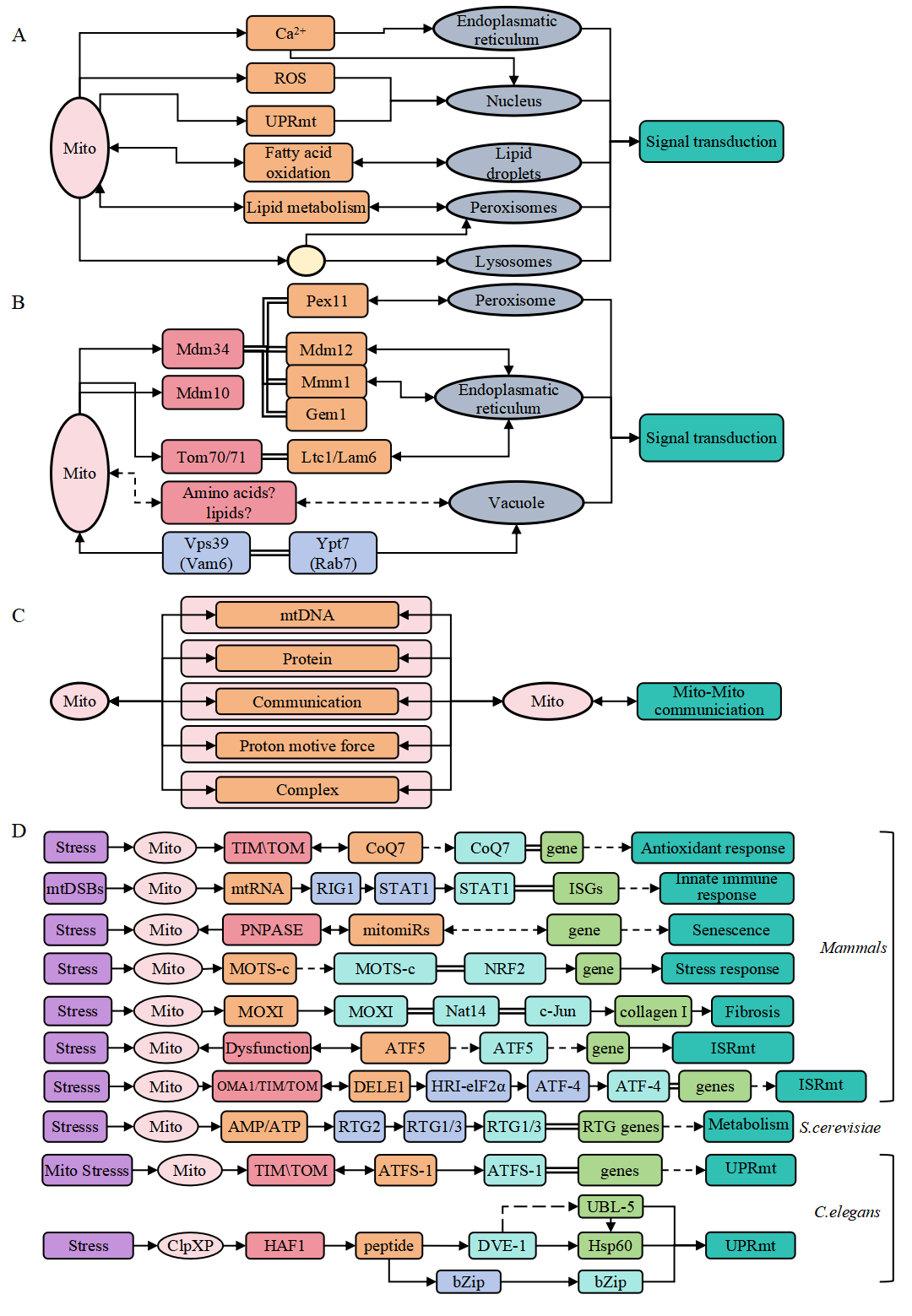
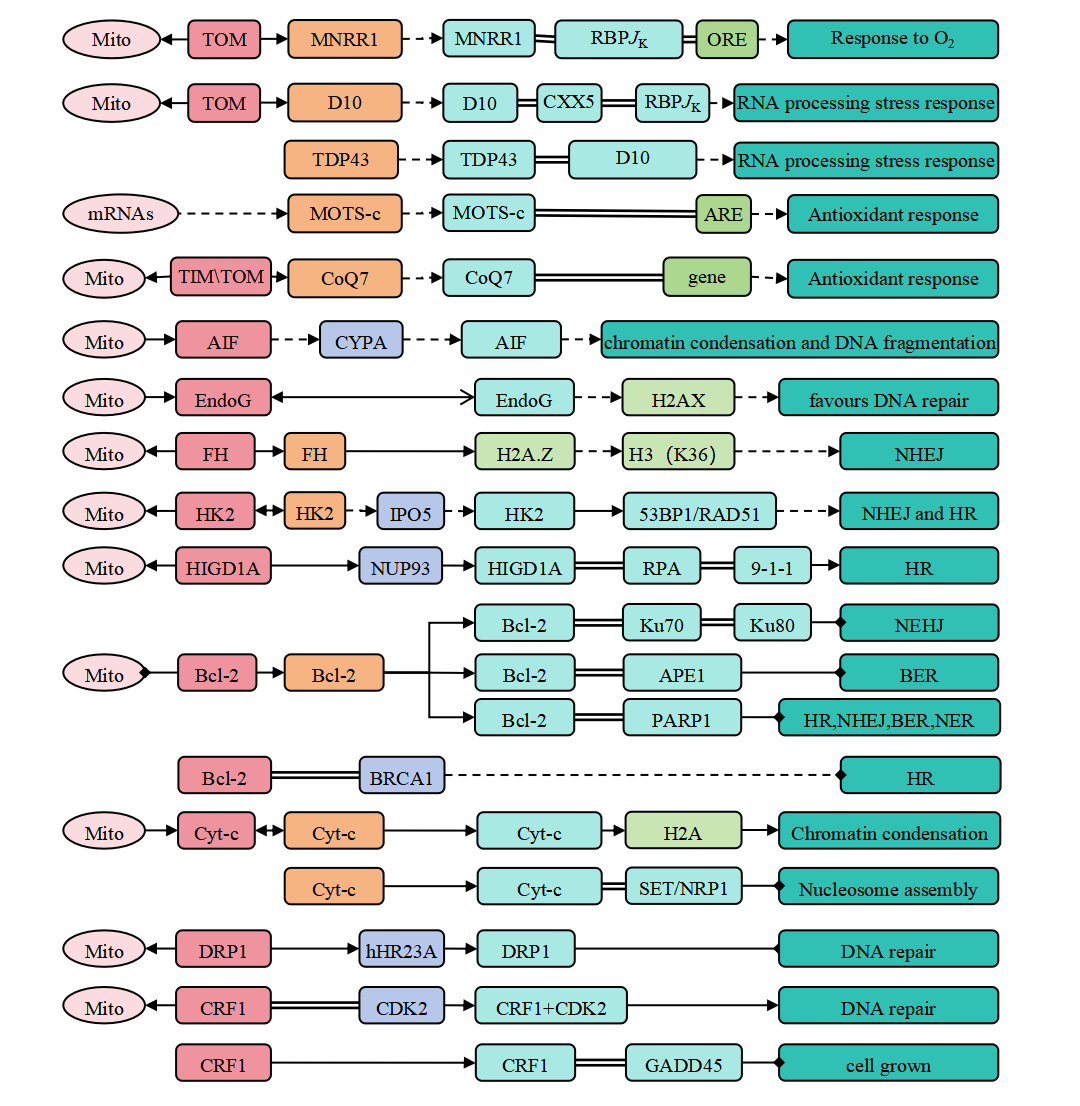
- Figure 4. Mitochondria communicate with other organelles A. Interorganellar communication between mitochondria and other organelles in mammals. B. Contact-dependent mitochondrial-organelle networks in S. cerevisiae. C. Mitochondria-mitochondria signaling interactions. D. Mitochondrial-nuclear communications.
